

Your Posture Is Aging You Faster Than You Think. Here's the Proof.
Picture this moment.
You're standing in line at the grocery store, or waiting for the elevator, or sitting across from someone at dinner — and you catch your reflection in the glass.
You don't recognize the person looking back at you.
Shoulders curled forward. Head jutting out. Upper back rounding into a shape your younger self never had.
You straighten up immediately. For about thirty seconds. Then the slouch comes back. It always does.
Here's What Nobody Tells You About Bad Posture
It's not a habit. It's not laziness. It's not a character flaw.
It's a structural problem — and it gets worse every single day you don't address it.
When your spine loses its natural curve, the muscles responsible for holding you upright fatigue. They stop doing their job. Your ligaments start compensating. Your discs compress unevenly. And your nervous system — which runs directly through your spinal column — begins operating under constant, low-grade stress.
That chain reaction produces effects most people never connect to their posture:
Chronic back and neck pain that shows up every single morning and worsens through the day — not because you "slept wrong," but because your spine never fully decompresses.
Fatigue that doesn't respond to sleep. When your thoracic spine is rounded forward, your lung capacity drops by up to 30%. Less oxygen in means less energy out — regardless of how many hours you slept or how much coffee you drink.
Headaches that start at the base of your skull. Forward head posture adds up to 60 pounds of effective force on your cervical spine for every inch your head sits forward of your shoulders. That tension has to go somewhere. It goes to your suboccipital muscles — which trigger tension headaches.
A body that looks and feels older than it is. A 2014 study in Health Psychology found that people with upright posture reported higher self-esteem, more positive mood, and lower fear compared to those with slumped posture — even when both groups were experiencing the same stressful situation. Your posture is not just how you look. It's how you feel about yourself.
The Moment Most People Realize Something Is Wrong
It usually isn't dramatic.
It's the Tuesday you realize you've been rubbing the same spot on your neck every day for six months. It's the Saturday you skip the hike because your lower back is "acting up" again. It's the moment you're helping your kid with homework and you can't sit on the floor for more than ten minutes.
That's the real cost of bad posture. Not the pain itself — but the slow shrinking of what your body will let you do.
According to the American Chiropractic Association, back pain is the single leading cause of disability worldwide, and the majority of cases are directly connected to postural habits built over years of sitting in unsupported positions. Years. Not days. Not weeks. Which means the earlier you address it, the easier it is to reverse.
What Actually Fixes Posture (and What Doesn't)
Stretching helps — but only temporarily. Stretching a muscle that immediately returns to a compressed position as soon as you sit back down is like mopping the floor with the tap still running. You need to address the environment, not just the symptom.
"Just sitting up straight" doesn't work. It requires constant conscious effort that no human being can maintain through a full workday. Research on posture correction consistently shows that passive supports — devices that hold alignment for you — produce significantly better long-term results than willpower-based approaches.
Expensive ergonomic chairs are helpful but incomplete. They support your sitting posture but do nothing for the hours you spend standing, walking, driving, or moving through your day. Posture isn't a chair problem. It's a full-day problem.
What works is consistent, gentle realignment — support that retrains your muscles toward their natural position over time, worn during your normal daily life so the correction happens without interruption.
What Happens When Your Spine Is Finally Supported Correctly
Within the first few days of consistent postural support, most people notice the same sequence of changes:
First, the tension in their shoulders and upper back begins to release — because those muscles are no longer doing the work your spine should be doing.
Then the breathing shifts. When your thoracic spine returns to its natural curve, your ribcage opens. People describe suddenly feeling like they can take a full breath for the first time in years.
Then the energy changes. More oxygen. Less muscular strain. Less nervous system stress. The 3pm energy crash that felt like just "how afternoons go" starts to disappear.
And finally — usually between day 7 and day 14 — the back pain that felt permanent starts to feel optional. Not gone overnight. But clearly moving in the right direction.
The Tool 29,000 OptimalBack Customers Are Using Daily
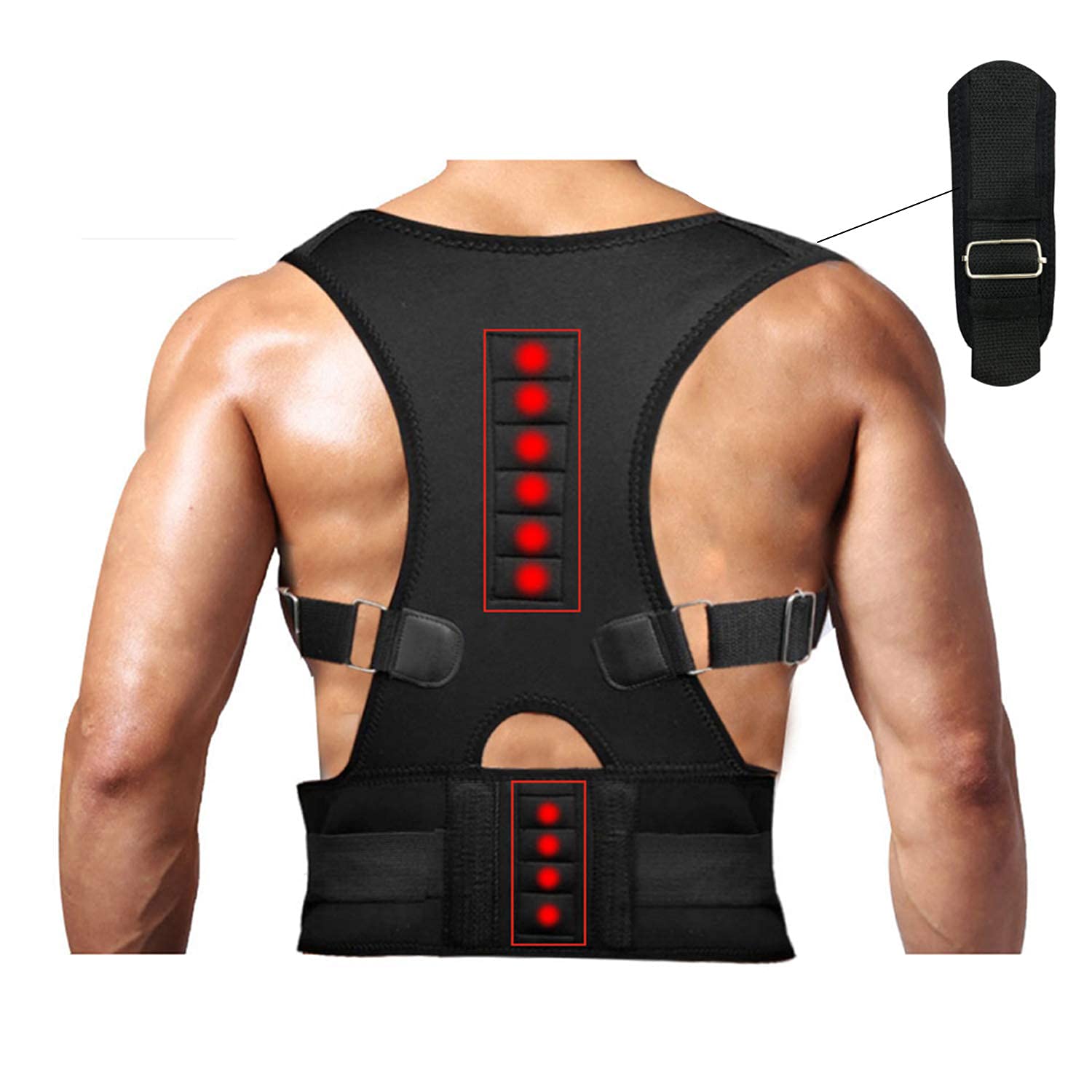
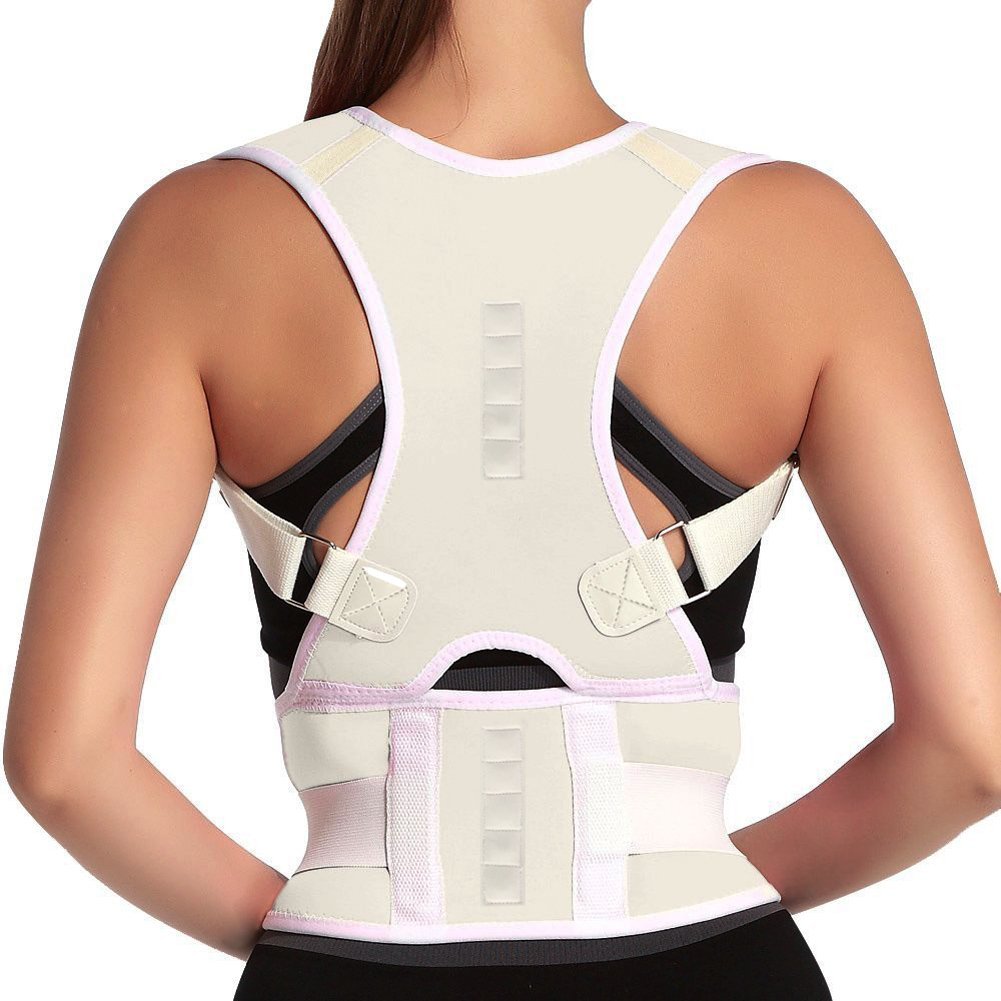
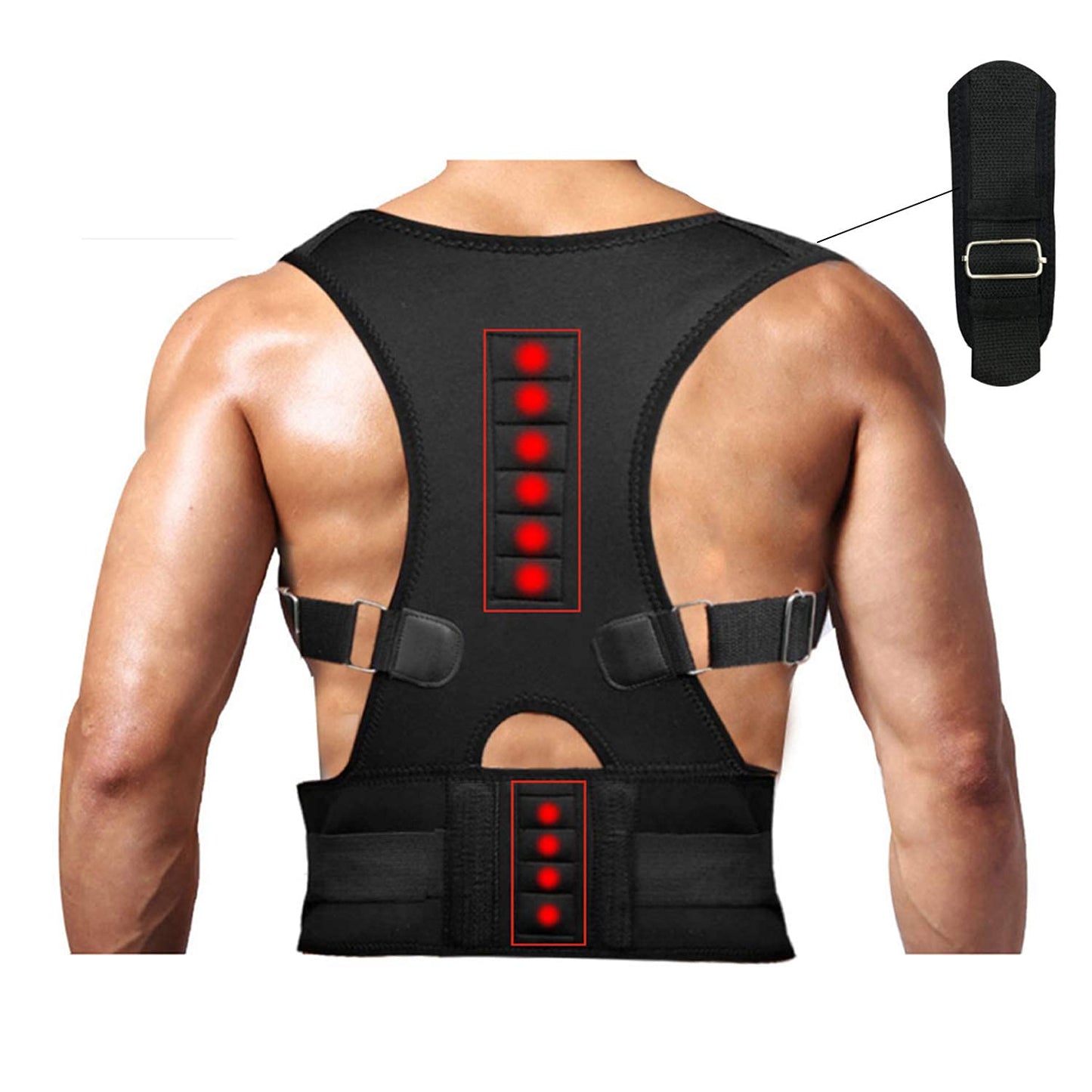
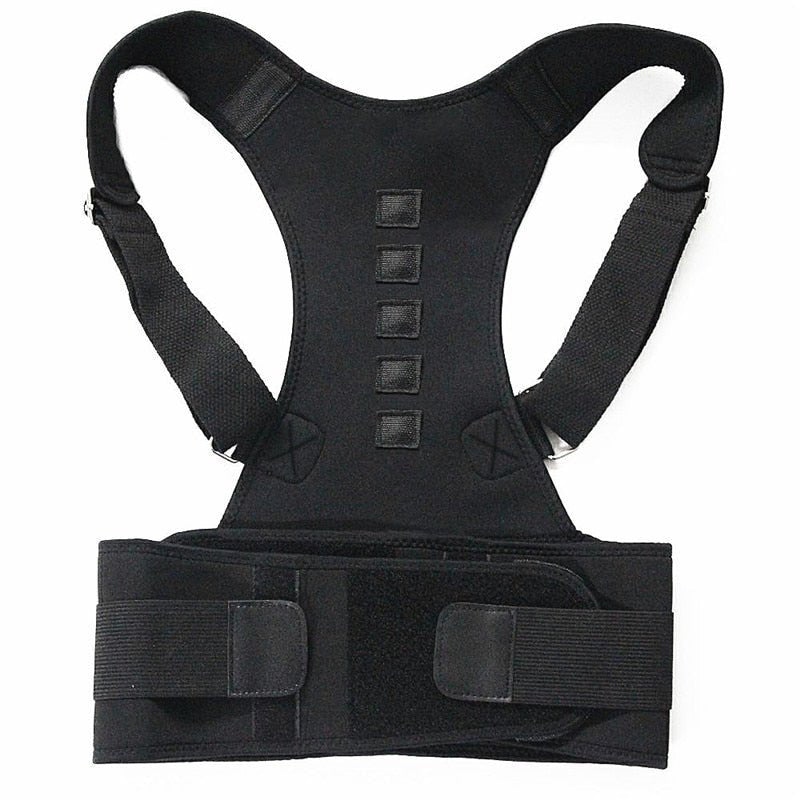
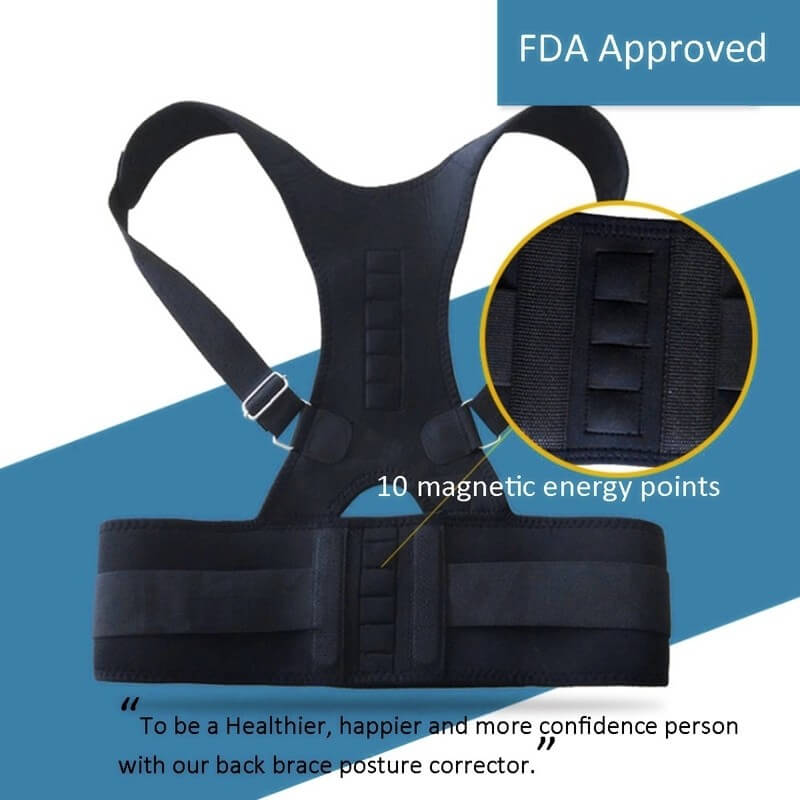
We built the Magnetic Therapy Posture Corrector for one specific person: someone who sits too long, moves too little, and has tried everything from foam rollers to chiropractors without finding something that actually sticks.
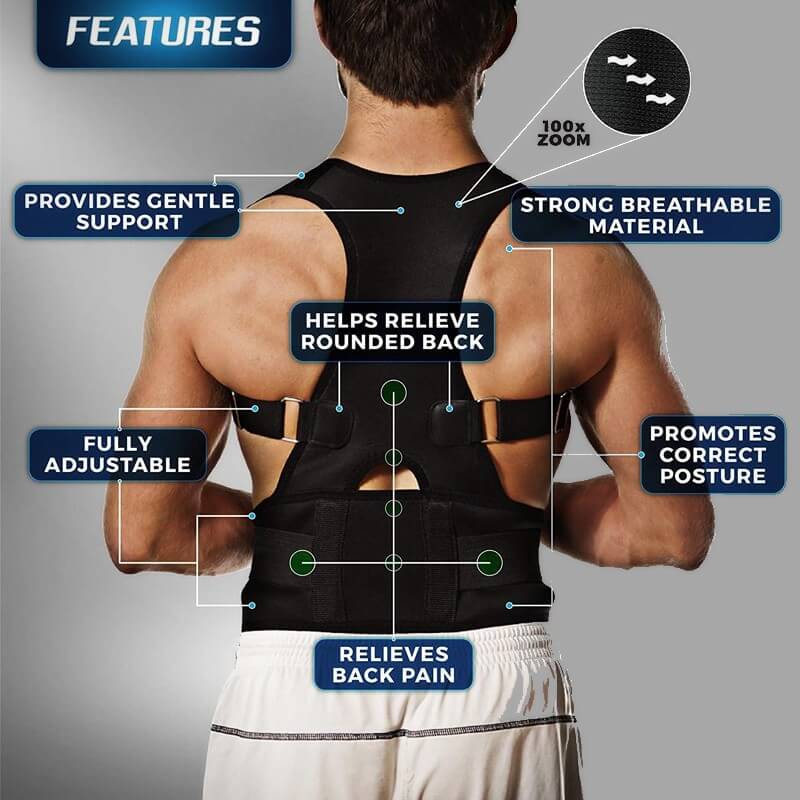
It works by gently drawing your shoulders back into natural alignment — not forcefully, not uncomfortably, but consistently enough that your muscles begin to remember where they're supposed to be.
The magnetic therapy component provides targeted relief to the upper back and shoulder muscles that have been under chronic tension — the ones responsible for most of the aching and tightness people associate with "just a bad back day."
It's designed to be worn under clothes. At your desk. During your commute. While you cook dinner. So the correction isn't something you do for ten minutes — it's something that happens all day, while you're living your life.
"I've had upper back pain for three years. I wore this for a week and the tightness I thought was permanent just... lifted." — Sandra K., verified buyer
"I was skeptical. I'm a nurse — I know a gimmick when I see one. This isn't a gimmick. My posture has visibly changed in two weeks." — Michelle T., verified buyer
"My chiropractor actually asked what I'd been doing differently. I told her. She approved." — James R., verified buyer
Try It. If It Doesn't Work, Pay Nothing.
We're confident enough in this product to offer a full 30-day money-back guarantee — no questions, no forms, no hassle. If you wear it consistently for 30 days and don't feel a measurable difference in your posture, your pain, or your energy, we'll refund every dollar.
→ Get the Magnetic Therapy Posture Corrector — $29.95 with Free Shipping
The body is remarkably adaptive. It adapted to your bad posture over years of repetition. Given the right support, it will adapt back toward good posture with the same consistency.
Your spine is the foundation everything else sits on. Treat it like one.






4 comments
vDLJFwtRflBo
bpnzvAJIHZC
cxogIWQYOGJSeNzi
gdWfCrjqDJFHYX