
Reading time: 6 minutes | For anyone who sits at a desk for more than 4 hours a day and has started to feel it in their back, neck, and shoulders.

Your Office Chair Is Not Your Friend
It was designed to look professional in a showroom. It was priced to fit a corporate procurement budget. It was chosen by someone in facilities management who has never sat in it for eight consecutive hours.
And every day you sit in it, your spine pays the price.
The modern office environment is, from a spinal health perspective, one of the most hostile environments the human body has ever been asked to spend time in. We evolved to move — to walk, squat, carry, and change position throughout the day. Instead, we sit in the same position, staring at the same screen, for the majority of our waking hours.
The result is a global epidemic of desk-related back pain that costs the economy hundreds of billions of dollars annually in lost productivity and healthcare expenses.
What 8 Hours at a Desk Actually Does to Your Body

When you sit without adequate lumbar and thoracic support, a predictable sequence of physical events unfolds:
• Within 20 minutes: Your lumbar spine loses its natural inward curve and begins to flatten, increasing disc pressure
• Within 60 minutes: Hip flexors begin to shorten, creating tension that pulls the pelvis into anterior tilt
• Within 2 hours: Intervertebral disc hydration decreases as normal movement-based fluid exchange is inhibited
• Within 4 hours: Circulation to the lower extremities is measurably reduced, contributing to fatigue and cognitive dulling
• Within 8 hours: The accumulated postural stress of the day reaches its peak — this is why 3PM feels like a physical and mental wall
Repeat this pattern five days a week, fifty weeks a year, for a decade — and you have the recipe for chronic back pain, disc degeneration, and the kind of persistent neck and shoulder tension that most office workers simply accept as an unavoidable part of their job. It isn't.
Why Willpower Alone Won't Fix Your Posture
Every office worker has tried it. You notice you're slouching, you sit up straight, and within two minutes you're back where you started. It's not laziness — it's neuroscience.
The muscles responsible for maintaining upright posture — primarily the deep spinal stabilizers, the rhomboids, and the lower trapezius — fatigue under sustained load. Unlike the large prime movers we can feel and deliberately engage, these postural muscles operate largely below conscious awareness. When they fatigue, the body defaults to passive structural support — which means hanging off ligaments and compressing discs rather than using muscle to maintain alignment.
This is why the standard advice of 'just sit up straight' fails. The muscles required to do it are tired. What's needed is either rest (which an office job doesn't allow), or support that takes the fatigue load off those muscles and allows them to recover while you work.
That is exactly what a smart posture corrector does.
The PosturePro Smart Brace: Built for the Modern Office

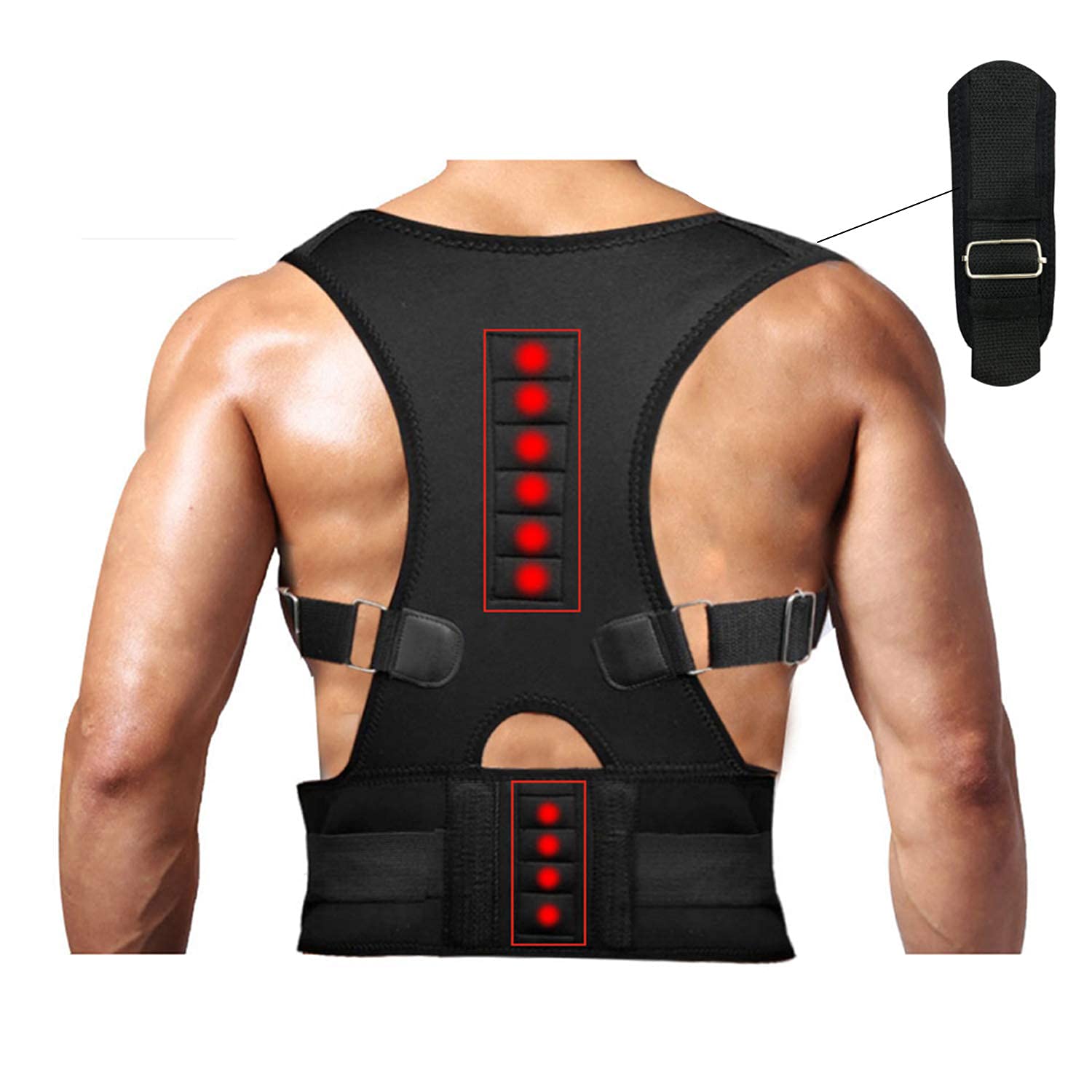
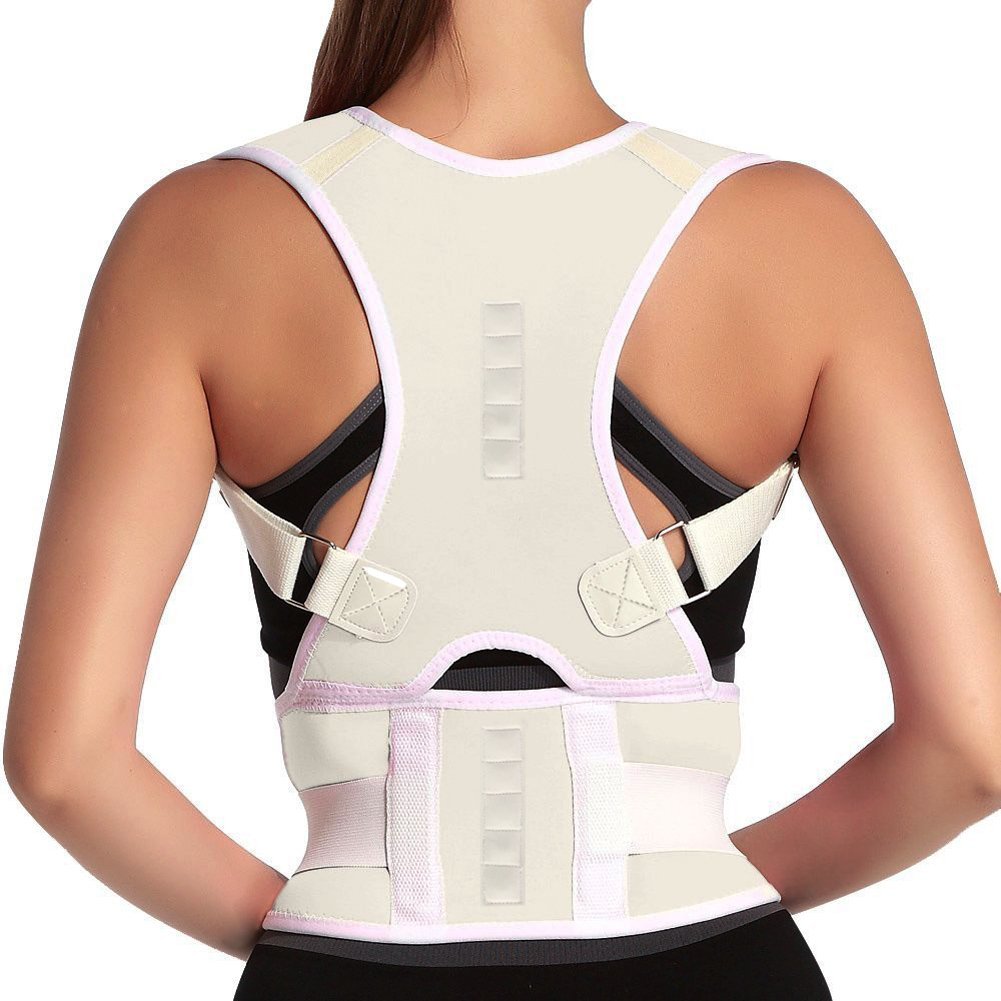
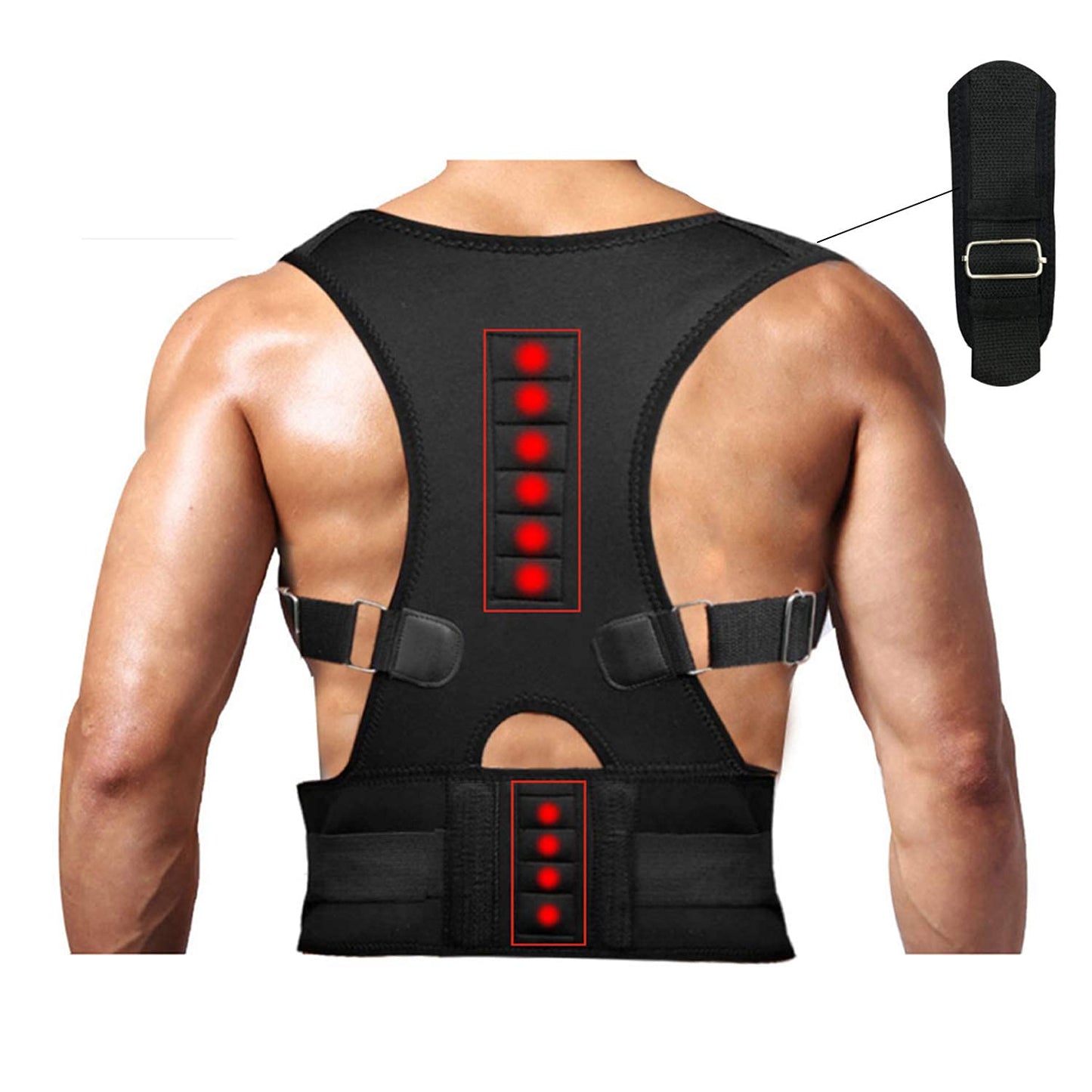
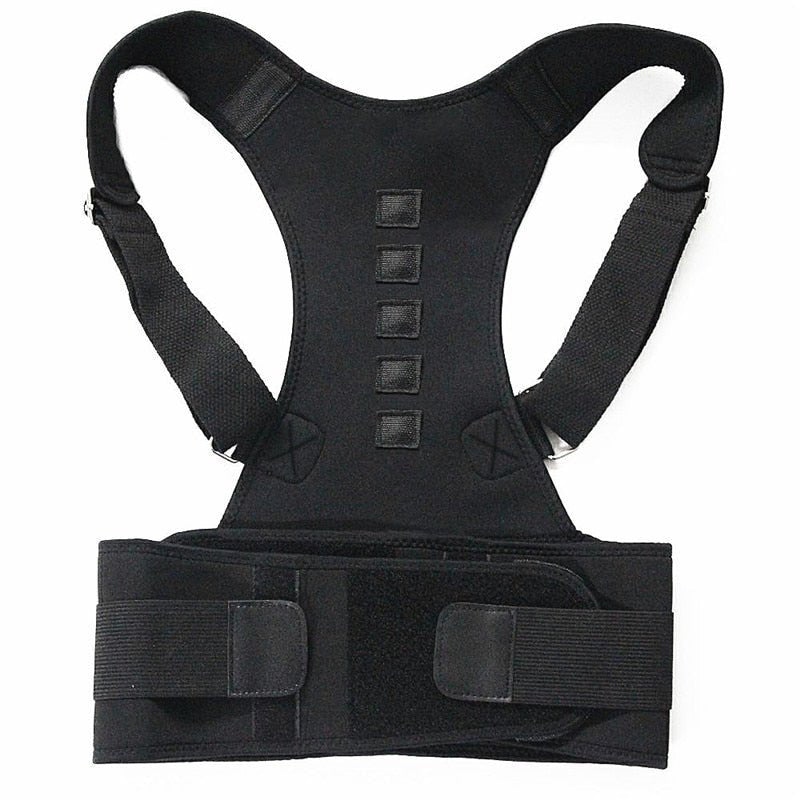
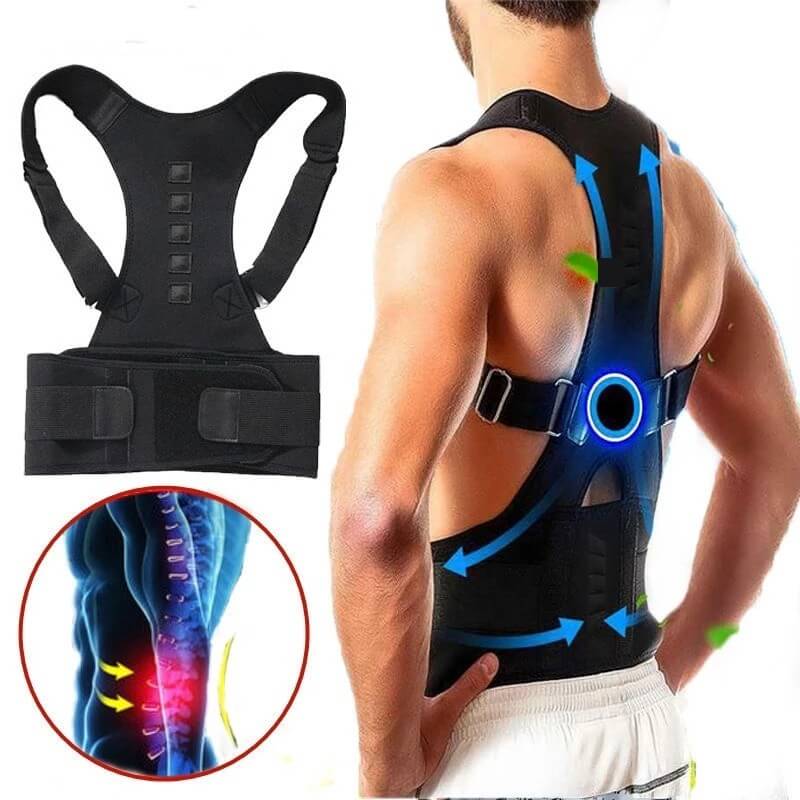
The OptimalBack PosturePro Smart Brace was designed with one specific user in mind: the professional who spends their workday at a desk and cannot afford to let back pain compromise their performance or career.
Smart Vibration Feedback
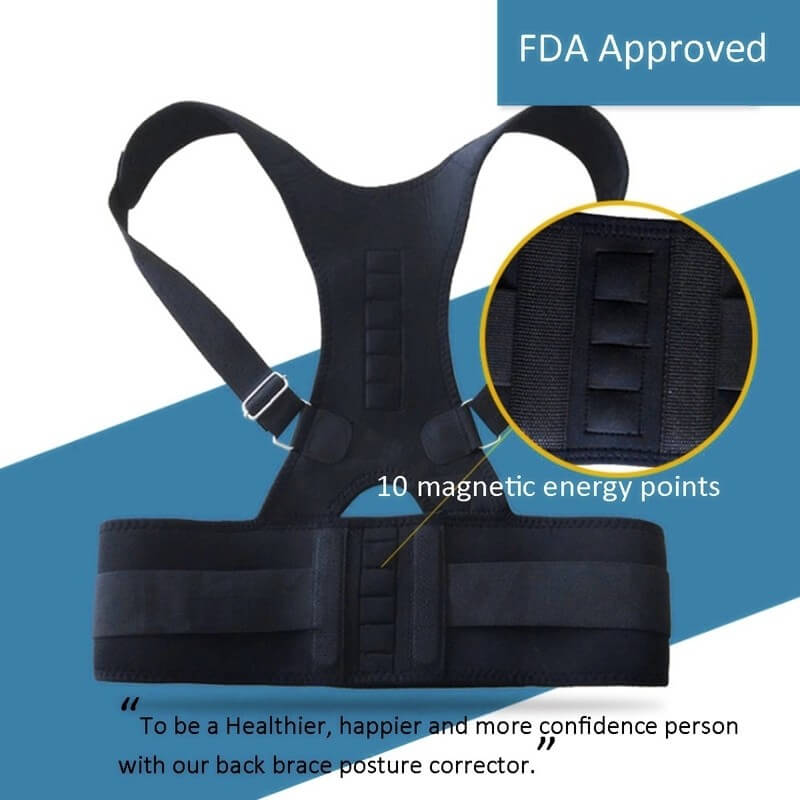
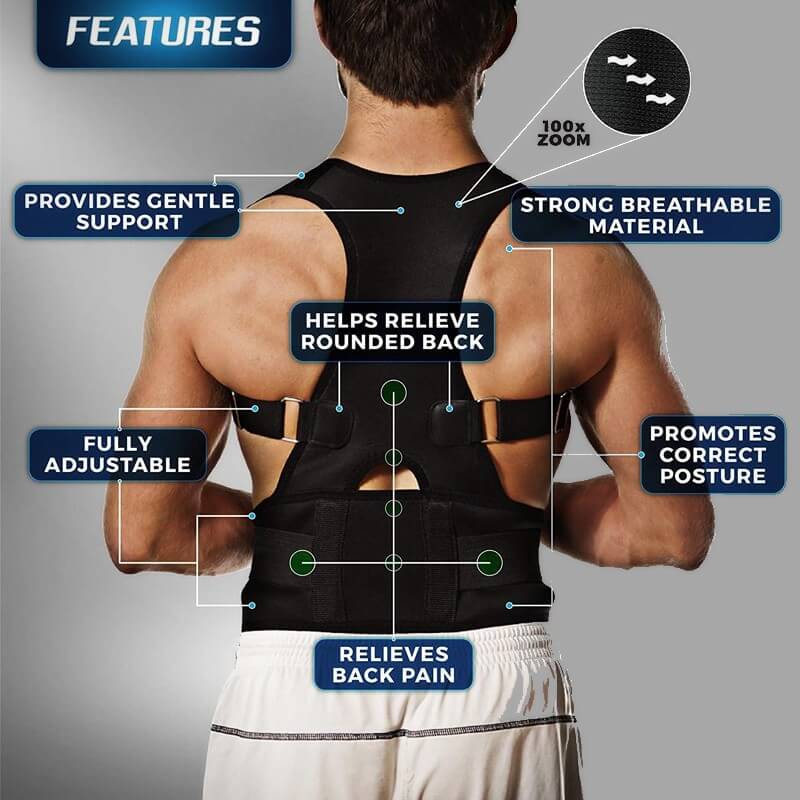
Unlike passive braces that simply pull your shoulders back, the PosturePro Smart Brace actively monitors your position. When you slouch beyond a set threshold, a gentle vibration cue prompts you to realign — training your neuromuscular system to recognize and correct poor posture automatically over time. This is the key feature that makes this device a retraining tool rather than a crutch.
Invisible Under Business Attire
The slim, professional-grade design is completely invisible under dress shirts, blouses, blazers, and business casual wear. You look professional at your desk meeting while the technology quietly improves your alignment.
All-Day Wearability
Lightweight and breathable, the PosturePro is designed for sustained wear throughout the workday — not just for 30-minute sessions. The moisture-wicking materials ensure comfort even in warm office environments or during an active commute.
Works at Your Desk, In Meetings, and on Your Commute
Posture problems don't stop at your desk. The commute, the conference room, the coffee run — all are opportunities for habitual slouching to reinforce itself. The PosturePro works in all of these environments, making your entire day a posture training session.
The Productivity Connection
|
Studies show that upright posture is directly linked to increased confidence, higher energy levels, and better cognitive performance. A 2015 study in Health Psychology found that participants with upright posture reported significantly higher self-confidence and more positive mood than slouched participants — even when both groups were performing the same stressful tasks. Better posture isn't just a health benefit. It's a performance edge. |
What Office Workers Say
|
⭐⭐⭐⭐⭐ "Software engineer, 10 years at a desk. The 3PM back ache that I thought was just part of my job is completely gone. I've been wearing this for 6 weeks and I've legitimately stopped thinking about my back during work hours for the first time in years." — Nathan P., Software Engineer ⭐⭐⭐⭐⭐ "I'm in client-facing financial services. Posture matters for perception in my field. The vibration reminder is subtle enough that I can use it in client meetings — nobody has ever noticed it. My posture in video calls has dramatically improved." — Rachel K., Financial Advisor ⭐⭐⭐⭐⭐ "Marketing director, 60-hour weeks. I was at the point of considering surgery for my cervical pain. My physio suggested trying this before any invasive options. Three months later I cancelled the surgical consultation." — Michael T., Marketing Director |
Building Better Desk Posture — A Complete Framework
The PosturePro Smart Brace works best as part of a broader approach to office ergonomics:
• Monitor height: Top of screen at or slightly below eye level
• Chair height: Feet flat on floor, thighs parallel to ground
• Keyboard position: Elbows at 90 degrees, wrists neutral
• Movement breaks: Stand or walk for 2 minutes every 45-60 minutes
• PosturePro: Wear throughout the workday as a continuous retraining tool
The goal is not perfect posture every second. The goal is a spine that spends more time in good alignment than bad alignment — and a nervous system that increasingly knows the difference.
|
→ Shop the PosturePro Smart Brace optimalback.com/products/posturepro-smart-brace ✅ 30-Day Money-Back Guarantee | Free Shipping | Doctor Recommended |
Frequently Asked Questions
How long should I wear it per day?
Begin with 2-3 hours per day and gradually increase to full workday wear over 2-3 weeks. This allows your postural muscles to adapt without becoming fatigued by the new demands placed on them.
Can I wear it during video calls and meetings?
Yes. The device is completely silent in its standard monitoring mode. The vibration feedback can be adjusted for sensitivity — if you're concerned about it triggering during a meeting, reduce the sensitivity slightly.
Will it work for someone who has been slouching for years?
Yes — and it's exactly this population that benefits most. The smart feedback system is particularly effective for deeply ingrained postural habits because it provides consistent feedback that verbal reminders and manual corrections cannot sustain throughout the day.
Is there a learning curve?
The first few days involve adjusting to the feedback sensation. Most users report that within one week the vibration cue feels natural and they begin to self-correct before it even triggers